Blog
How OEM Diagnostic Tools Are Transforming Heavy Equipment Maintenance

Introduction
Modern heavy equipment diagnostic tools are becoming essential as construction and agricultural machinery evolves far beyond purely mechanical systems. Excavators, wheel loaders, tractors, harvesters, and other heavy-duty equipment now rely on sophisticated electronic control systems that manage everything from engine performance to hydraulic response and emissions compliance.
These machines operate using multiple electronic control units (ECUs) that constantly monitor sensors and adjust system behavior in real time. As a result, diagnosing and maintaining heavy equipment requires advanced tools capable of communicating directly with these electronic systems.
For fleet operators and repair workshops, accurate diagnostics has become a critical part of maintaining machine uptime and preventing costly downtime.
The Growing Complexity of Heavy Equipment
Over the past decade, manufacturers have introduced increasingly advanced technologies into heavy machinery. Electronic fuel injection systems, automated transmissions, emissions control systems, and telematics platforms are now standard features across many equipment models.
These systems generate large amounts of operational data that technicians can analyze to detect faults, monitor performance, and perform calibration procedures.
However, accessing this data requires specialized diagnostic platforms capable of communicating through proprietary manufacturer protocols.
Without proper diagnostic tools, identifying the root cause of equipment issues can be extremely time-consuming.
Why Accurate Diagnostics Matter for Fleet Operations
For construction companies and agricultural businesses, machine downtime can have serious financial consequences. A single excavator or tractor being out of service may delay entire projects or harvest schedules.
Advanced diagnostic tools help technicians identify problems quickly and accurately, reducing repair time and minimizing equipment downtime.
Professional diagnostic systems allow technicians to:
-
retrieve detailed diagnostic trouble codes
-
monitor live sensor data
-
test electronic components
-
perform system calibrations
-
reset maintenance intervals
This level of access enables technicians to resolve issues efficiently and maintain equipment reliability.
The Role of OEM Diagnostic Laptop Systems
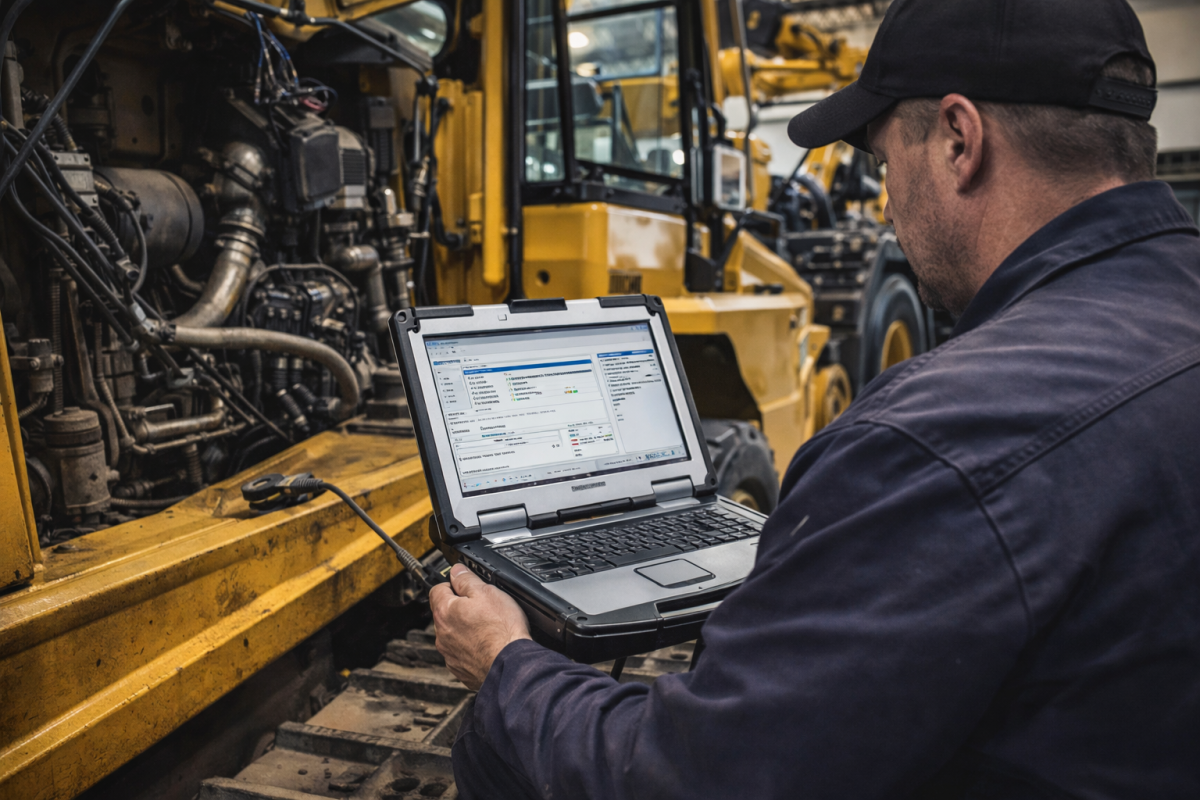
Many professional workshops now rely on dedicated diagnostic platforms designed specifically for heavy equipment diagnostics. These systems combine powerful diagnostic software with stable hardware environments optimized for running manufacturer-level diagnostic applications.
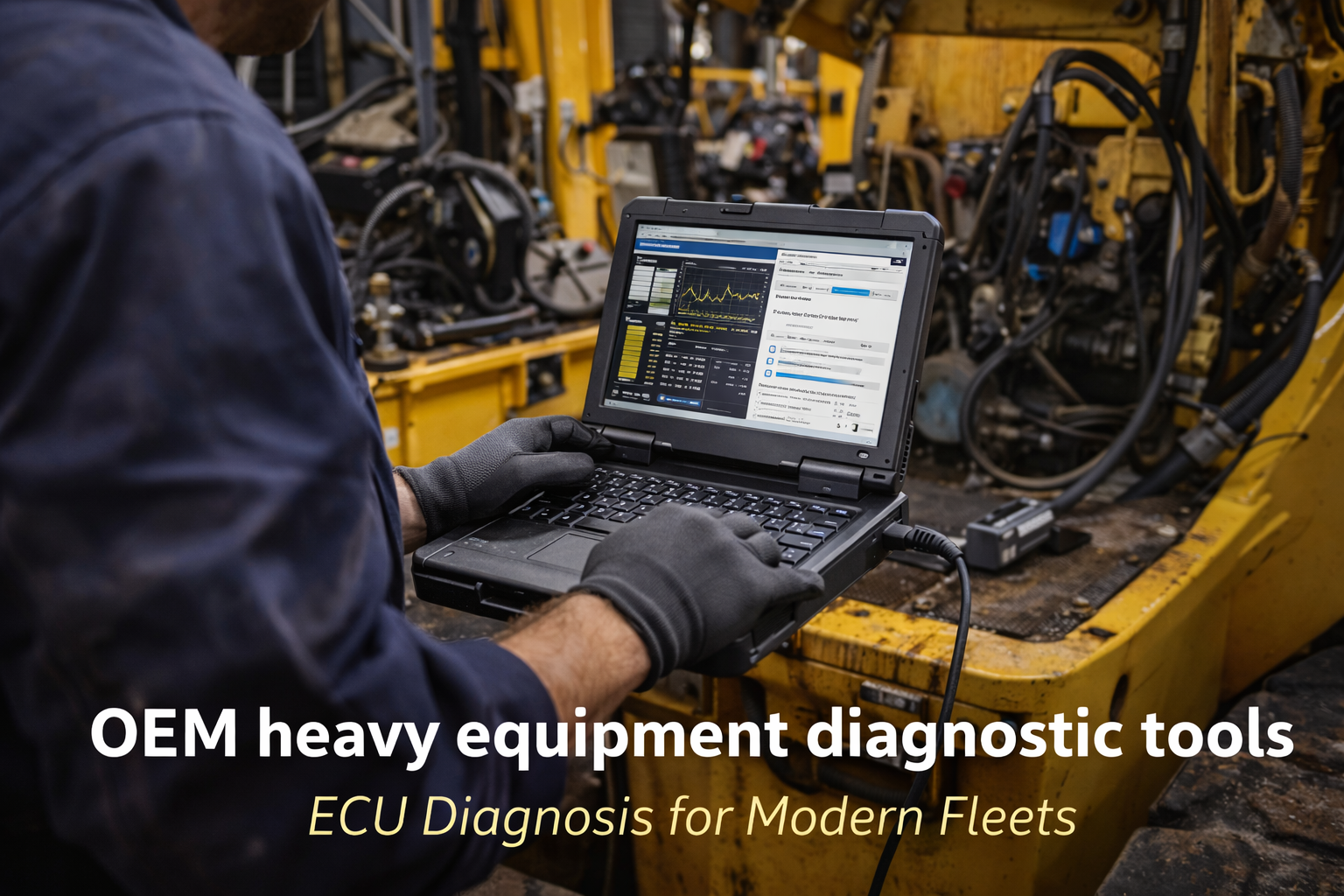
Technicians frequently use OEM heavy equipment diagnostic tools that allow direct communication with vehicle control modules and provide access to advanced service procedures
These diagnostic platforms are often preferred because they provide a stable and reliable environment for running complex software used by equipment manufacturers.
Integrated Diagnostic Platforms Improve Workshop Efficiency
Instead of installing multiple diagnostic programs on standard computers, many technicians prefer integrated diagnostic laptop systems designed specifically for equipment diagnostics.
These systems often include:
-
pre-installed OEM diagnostic software
-
compatible communication drivers
-
optimized operating system configurations
-
high-performance storage and processing hardware
Using a dedicated diagnostic platform helps eliminate software compatibility problems and ensures stable communication with machine ECUs.
This approach allows technicians to focus on diagnostics and repair rather than troubleshooting technical installation issues.
The Future of Heavy Equipment Diagnostics
As machinery continues to become more advanced, the importance of professional diagnostic tools will continue to grow. Modern equipment increasingly incorporates predictive maintenance systems, telematics monitoring, and remote diagnostics capabilities.
These technologies allow fleet managers to detect potential issues earlier and schedule maintenance before failures occur.
Workshops that invest in advanced diagnostic platforms and professional heavy equipment diagnostic tools are better prepared to maintain modern machinery efficiently and keep fleets operating at peak performance.
Discover more from The Best Manuals Online
Subscribe to get the latest posts sent to your email.